

Youth Food Waste Ambassadors Inspire Change in Schools Across Latvia


From March to May 2026, pupils across Latvia took the lead in raising awareness about food waste in their schools and local communities as part of the Youth Food Waste Ambassador Programme. Through creative campaigns, practical activities and peer-to-peer education, young ambassadors inspired fellow students, teachers and families to think differently about food waste and sustainable food consumption.
The programme is part of the project “Food for the Future: A Cross-Baltic School-to-Community Approach to Zero Waste”, which promotes sustainable food consumption and practical solutions to reduce food waste in schools and communities across the Baltic region.
Over the three-month awareness campaign, Youth Food Waste Ambassadors organised a wide range of initiatives tailored to their own schools. They interviewed fellow students about their opinions on school meals, how much food they usually leave on their plates and their understanding of food waste. By listening to their peers, ambassadors discovered which messages and activities were the most engaging for young people and how sustainability topics could be communicated in relatable ways. Many participants used these insights to create social media content throughout the campaign.
Most schools carried out food waste measurements in their canteens, with pupils weighing leftovers, documenting the results and presenting their findings. Ambassadors also spoke with school canteen staff about the causes of food waste and the measures already being taken to reduce it.
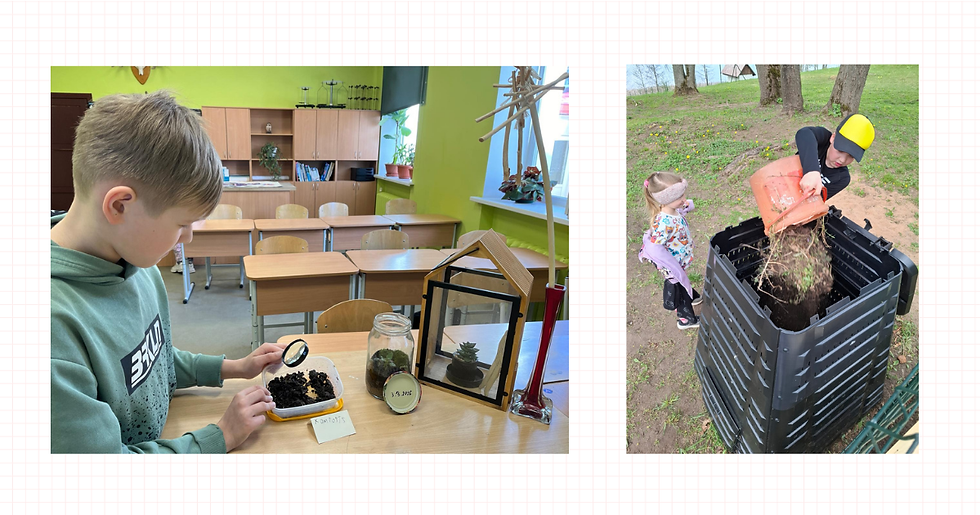
Creative awareness campaigns brought the topic to life through colourful posters, social media visuals, flash mobs during lunch breaks and themed events at schools such as Empty Plate Day and Zero Waste Day. A zero waste picnic was organized during a school hike, one activist started a composting initiative, educating teachers and students about organic waste, while others visited younger classes to deliver engaging lessons and activities about food waste and sustainable habits.
Throughout the programme, participants regularly met online with fellow ambassadors, teachers and mentors to exchange experiences, discuss challenges and reflect on what worked best in different schools. The programme is built on the idea that young people themselves are often best placed to inspire and engage their peers. By leading activities in their own schools, participants showed that students can play an active role in creating meaningful change within their communities.
An important part of the programme was ensuring that these activities reached audiences beyond each individual participant’s class. Throughout the campaign, young ambassadors documented their initiatives through photos, videos, interviews and reports, sharing them on their own social media channels as well as school and student council accounts. Their posts helped to spread practical ideas and encourage more young people to get involved.
Beyond raising awareness about food waste, the initiative also helped pupils develop leadership, communication and teamwork skills while encouraging curiosity and independent research on sustainability topics. Participants shared what they learnt not only with classmates, but also with friends and family members, creating wider positive effects in local communities.
The next stage of the project will bring Youth Food Waste Ambassadors from across Latvia together in Riga. They will exchange experiences and meet youth food influencer Pipars for a shared cooking class to get inspiration on easy and sustainable cooking and creating engaging social media content.
The project “Food for the Future: A Cross-Baltic School-to-Community Approach to Zero Waste” is implemented by Danish Cultural Institute in Estonia, Latvia and Lithuania in cooperation with Foundation for Environmental Education, Embassy of Denmark in Latvia and Embassy of Sweden in Latvia and supported by the Nordic Council of Ministers.


Comments